Circularity & Systems Thinking
ORDERING MODERN COMPLEXITY & DESIGNING RESILIENCE INTO PLACES
If only for its genuine determination to capture complexity in a relatable way, Circular & Systems Thinking is fascinating and it defies categorisation as an art, science or humanity. Donella Meadows, one of its founders classed it as an art because of the “intuition” required to practise it so in the context of Urban Design I shall consider it so.
Systems thinking is a powerful tool that can be used in Urban Design to build an understand the complexity and dynamism of real urban places. It is practised widely today but the discipline began as a method to map computational processes. In 1972 an OECD report by the ‘Club of Rome’ group applied it to model the outcomes of a ballooning population and pollution crisis on Earth. The World3 computer model generated estimates that at 1970’s consumption levels the world population would hit a ceiling between 7&8 Billion and then collapse.
The approach had many detractors and the analysis underestimated the complexity and resilience of earth systems. But the outcomes were held up as evidence that Earth was a finite planet with limitations. Limits to Growth linked the world economy with the environment for the first time. [2]
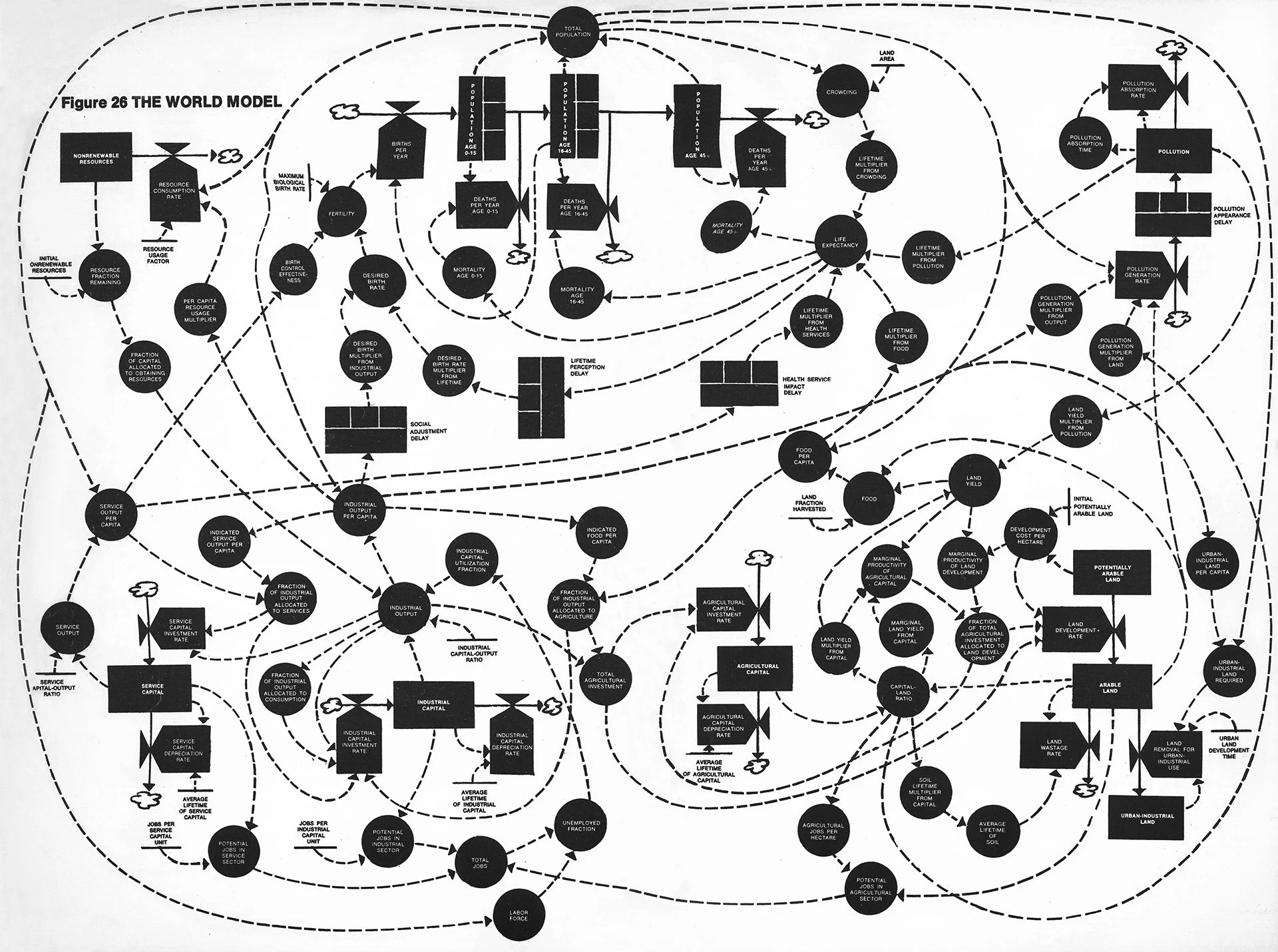
World 3 model [1] : Simpler times.
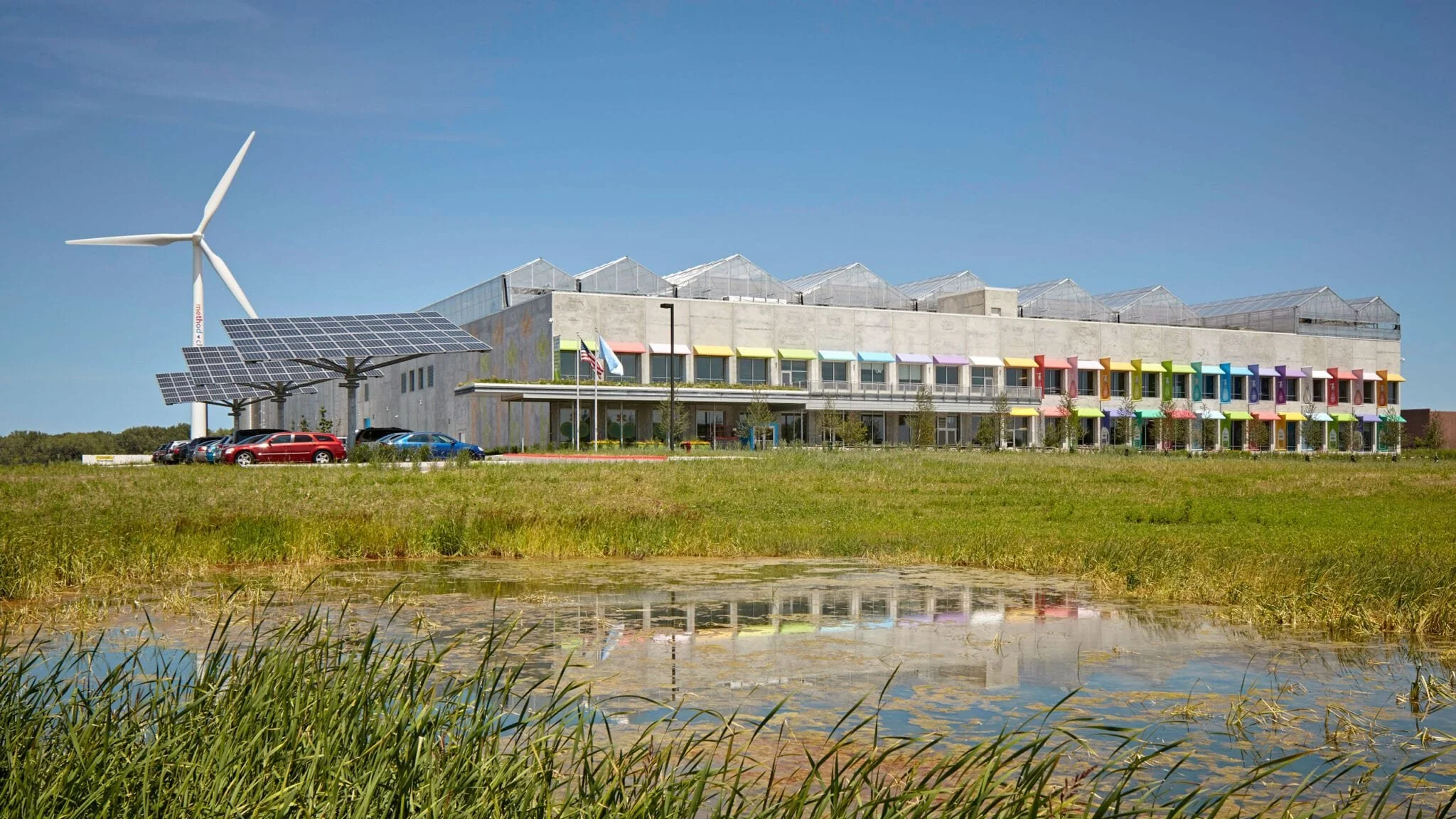
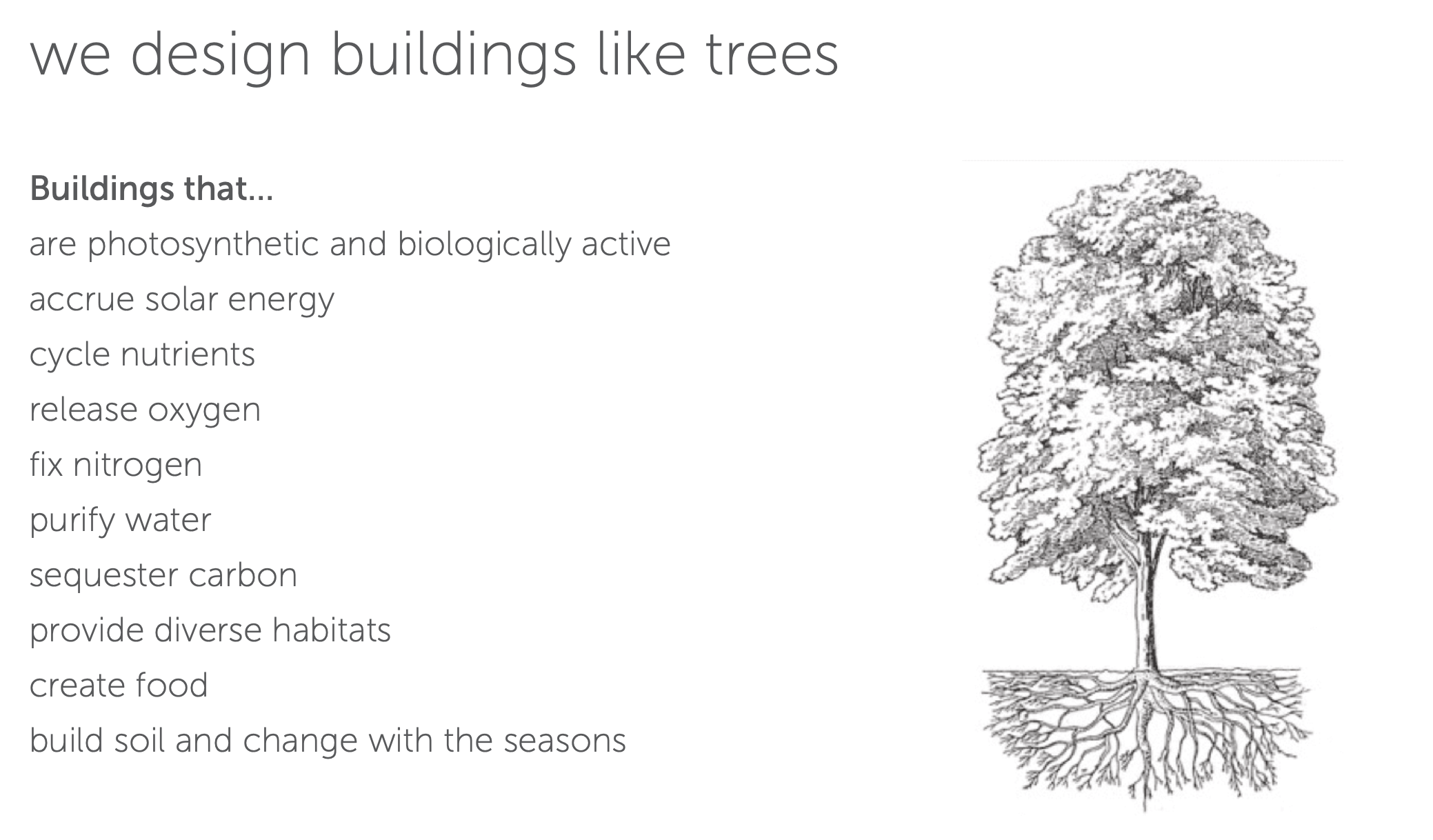
Though not aesthetically astounding, a renewably powered soap factory, with a farm that makes 500 tonnes of greens per year on the roof is undeniably compelling.
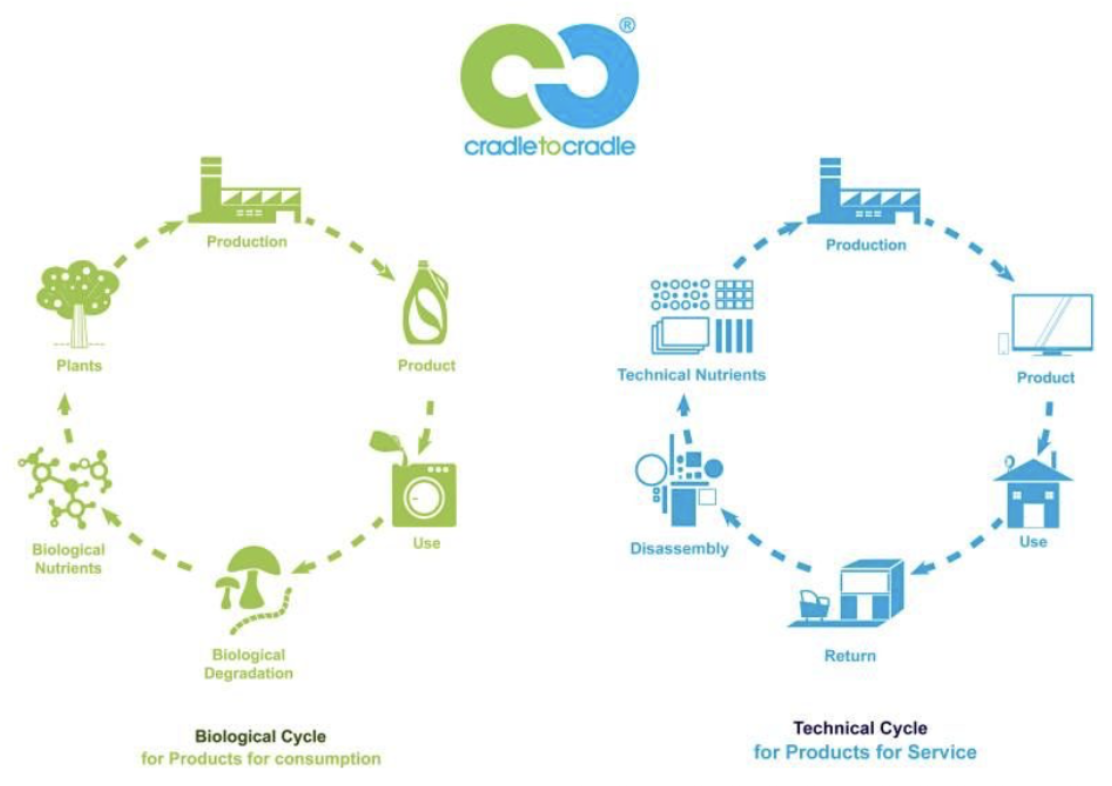
Today Systems thinking is embedded in government, business and academia but within design the earliest ‘linear to circular’ thinkers were Architect William Mcdonough and Chemist Michael Braungart (M+B) with their Hanover Principles and their design concept ‘Cradle to Cradle’.[3] Cradle to Cradle can be credited for the emergence of circular design thinking.
The concept was positioned as an ecological view of human economic activity and likened to the regenerative cyclical growth and relationship that a tree has with its environment; Trees ‘loop’ materials in endless ‘biological’ cycles where waste in one system was remade as food for another system. M+B asserted that industry could do the same with ‘technical’ cycles of nutrition. Waste could become food.
The theory was popular with global corporations who began to reframe their industrial waste streams as assets rather than liabilities. In practise, the impact of Cradle to Cradle can be credited for embedding concepts of environmental sustainability into manufacturing because it spoke the language of business. But while the new circular design thinking inspired and catalysed some innovative products, its effectiveness was disappointingly limited.
The complex material composition of most products and the costs of post-use reclamation of materials prevented the widespread uptake of the Cradle to Cradle philosophy within product manufacturing. Cradle to Cradle was frequently unable to ‘close the loop’ unless the system and inputs were oversimplified.
The approach promised a world of abundance but in collision with regulations, material costs, and complexity, was eventually reduced to a more realistic and accessible terminology; Upcycling [4]
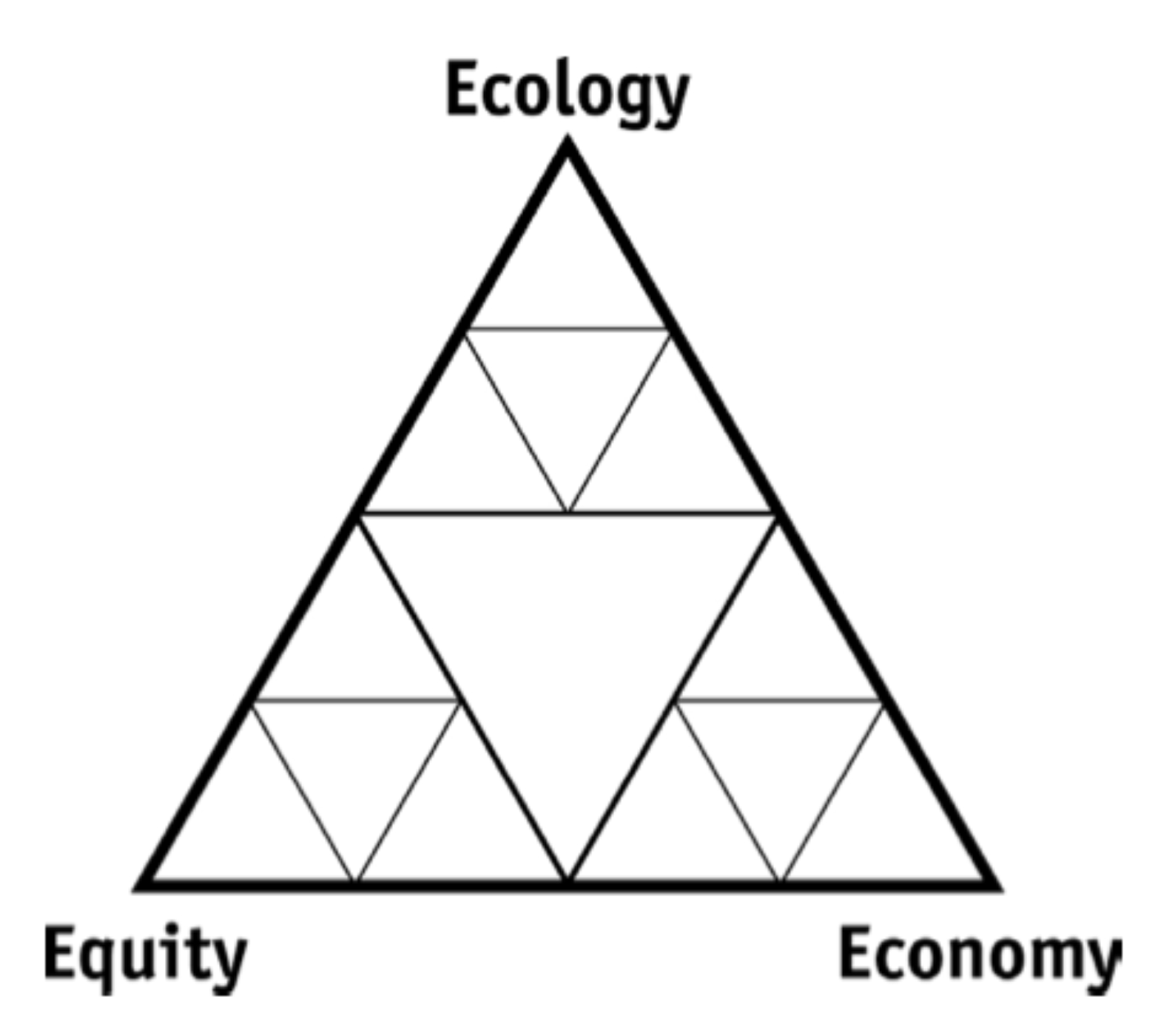
Many would cite Cradle to Cradle as a greenwashing exercise (see image) but the work became a foundation in providing inspiration and methods for evaluating design decisions through a matrix of Ecology, Economy and [Social] Equity and in terms of efficiency vs effectiveness. [3]
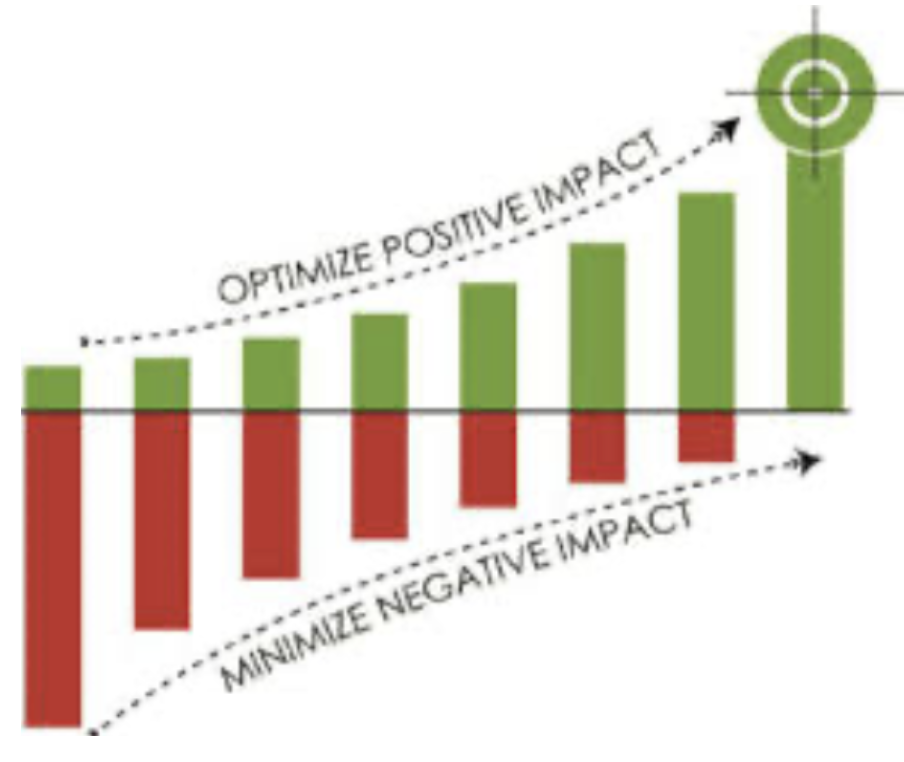
Mcdonough drew attention to the difference between efficiency and effectiveness [ie doing really bad things efficiently is not positive] and created a design mantra that, while seemingly simple, still holds water. Setting a goal to optimise positive impact or in other words to achieve ‘regenerative’ (rather than degenerative or extractive) outcomes was perhaps Mcdonoughs greatest achievement.
““Not just less bad, but more good””
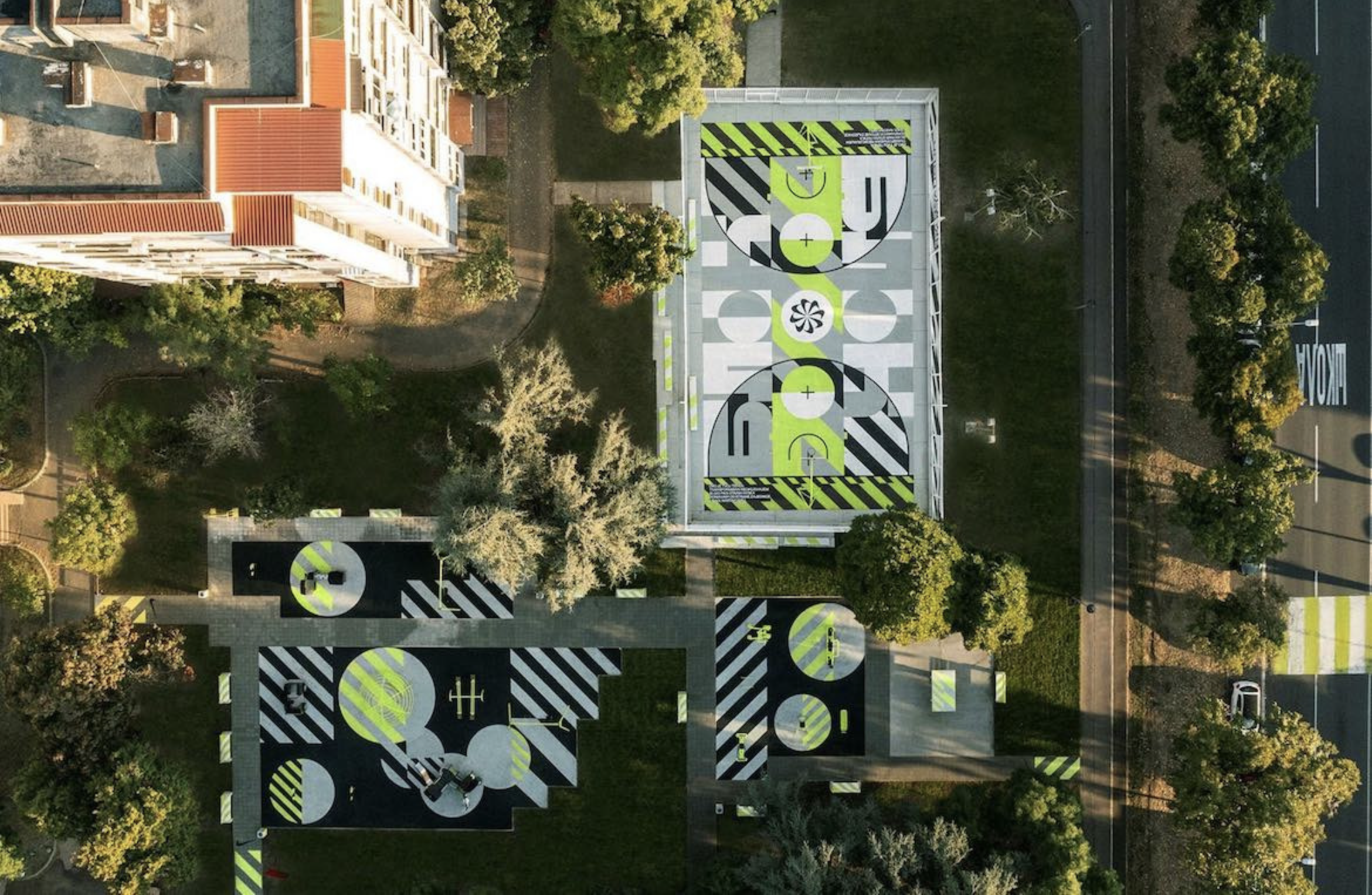
Nikes 2021 ‘Move to Zero’ sustainability initiative created 2 widely publicised basketball courts from 20,000 upcycled sneakers. (They didn’t mentioned what happened to the other 1.48 Billion shoes that year) [5]
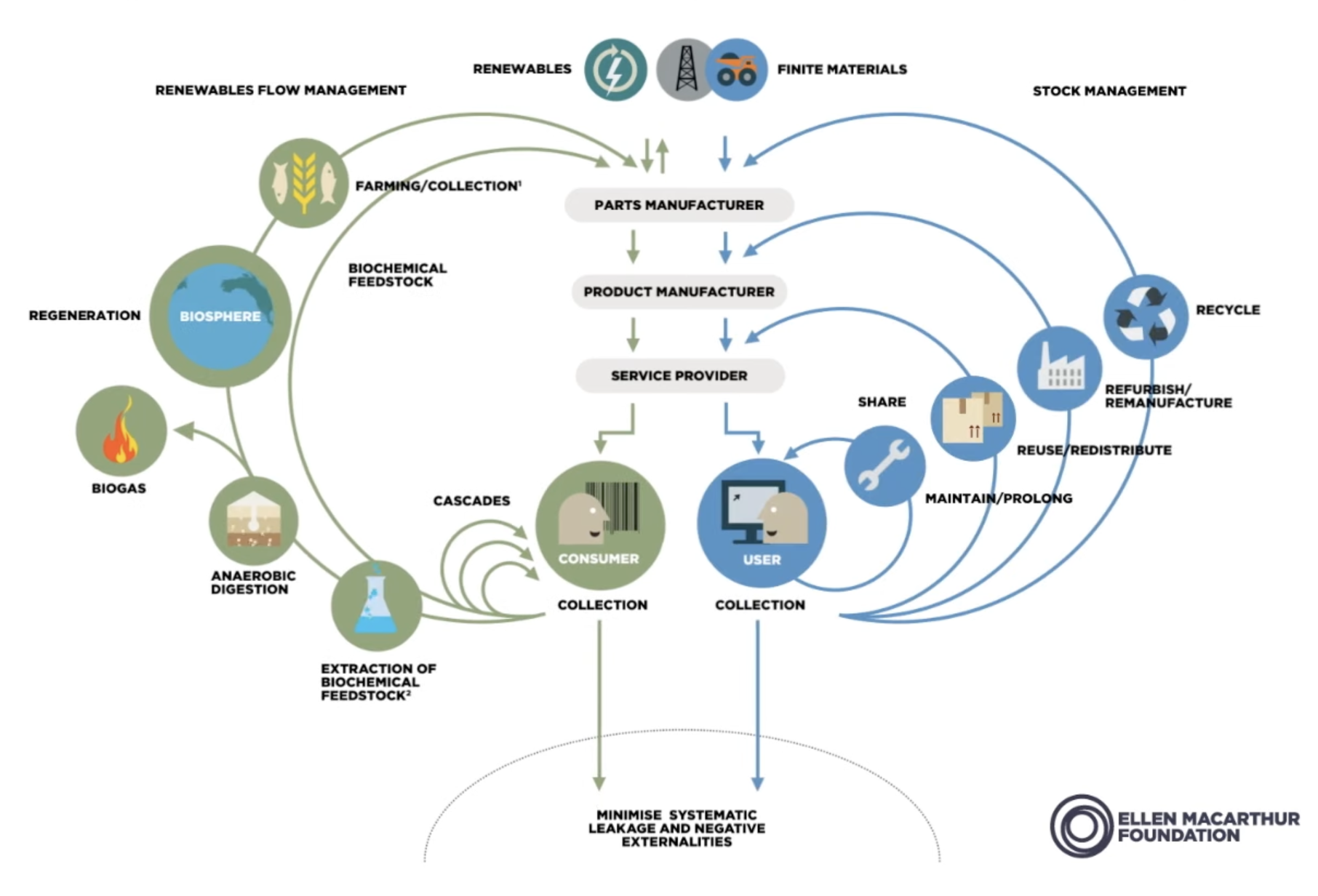
Emerging from Systems Thinking and Cradle to Cradle, the Circular Economy provides useful frameworks for understanding the built environment.
The Ellen Macarthur Foundations “system solutions framework”(snappy name) applies to Architecture and Urban Design through the material intensive construction design phase but also through its operation 'as a “system of systems influencing many other sectors, including mobility, retail, manufacturing, energy, and material production.” The framework is “based on three principles, driven by design: eliminate waste and pollution, circulate products and materials (at their highest value), and regenerate nature.” [6]
Circular frameworks are rigorous tools which can enable insights into the physical resilience of new urban designs or existing places. In industry, the frameworks allowing client and developers to inform decision making, procurement and to determine whether proposals meet their original design intentions or valorise the correct outcomes of a design.
“Adopting regenerative thinking and principles in policies has the potential to create multiplier effects beyond direct control. If we identify these regenerative opportunities we can create value across economic, ecological, and social dimensions while simultaneously promoting community wellbeing.”
Identifying and actioning tangible “regenerative opportunities” is the central challenge in a Circular Economy Systems approach. The complexity and rigidity of the human world can frequently stifle the pursuit of the goal which is why the work of Ellen Macarthur Foundation and other Systems lead organisations is so critically important to humanity.
Biomimicry [From the Greek word mimesis for imitation] is a design approach that underpinned Mcdonoughs Cradle to Cradle design thinking and has Systems thinking baked into its DNA. The discipline was founded by biologist Janine Beynus on publishing '“Biomimicry innovation inspired by Nature” [7] in 1997 which looks at “Nature as model” to imitate in designing, “Nature as measure” to judge our designs and “Nature as mentor” in order to teach us how to view and value or learn from the natural world.
’Biomimicry’ has been absorbed into design discourse but almost 30 years after publishing, the evidence of its inherent genius is less visible than is desirable, perhaps due to the cost of research; advancing materials science, biological systems and chemistry to mimic threads as strong as spiders silk or skyscrapers like ant hills have prevented the concept from delivering the progress Beynus might have envisioned. Like in Cradle to Cradle there are countless examples of ‘designers’ attempting to claim biomimetic status on a single metric of design and its use purely for greenwashing or that would fall into the category of Less Bad rather than More Good.
The seemingly relentless optimist Michael Pawlyn who worked on a range of high profile projects including the Sahara Forest project and Cornwalls Eden Project developed the concept of Biomimicry in Architecture. In his book Flourish with Sarah Ichioka, published in 2022, Michael draws on the warnings that Donella Meadows’ 1972 predictions where frighteningly accurate: “the current business-as-usual trajectory could result in societal collapse in 2040” and goes on to urge “those of us working in the built environment today have an important role to play in the transition from a pathway to collapse towards a flourishing ecological civilisation” [8]
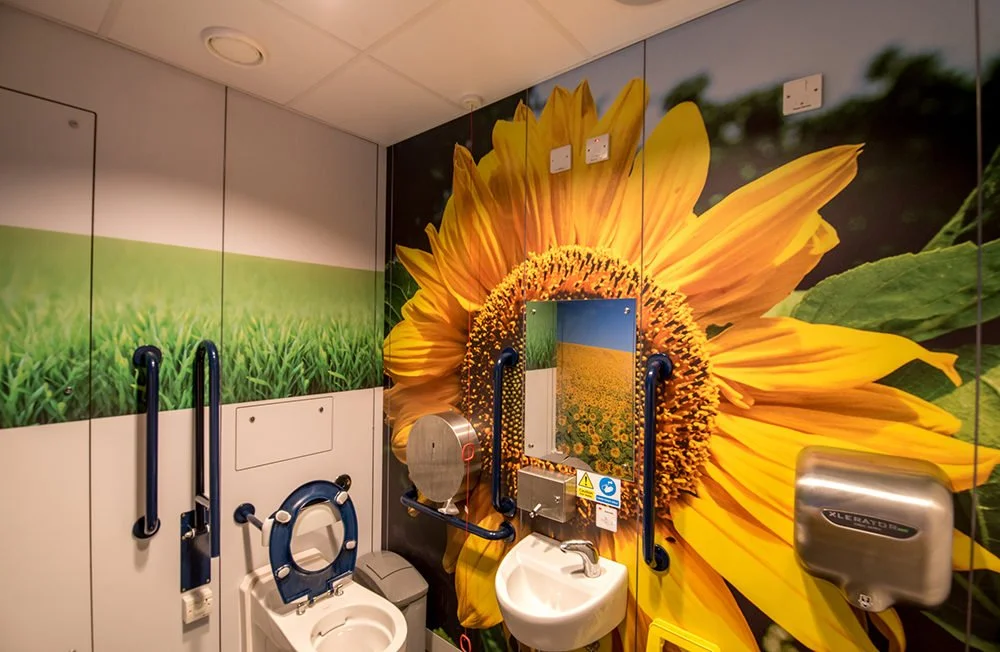
BP Petrol Stations have managed to confound the Cradle to Cradle classification system altogether by managing ‘more bad’ through utterly shameless greenwashing.
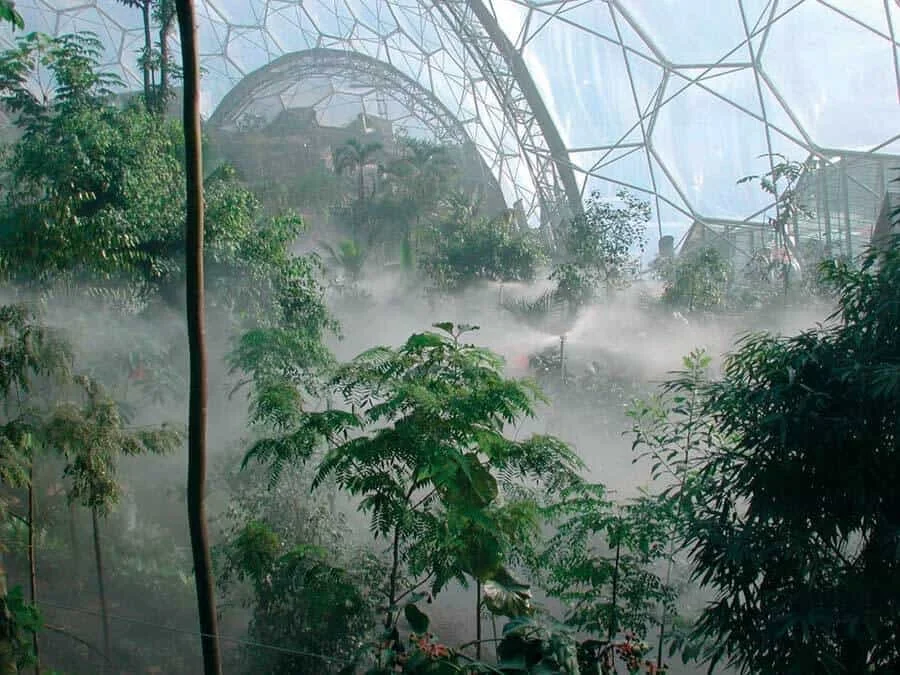
Eden Project tropical domes - using biomimetic design Pawlyn’s team made the roofs lighter than the air inside the dome.
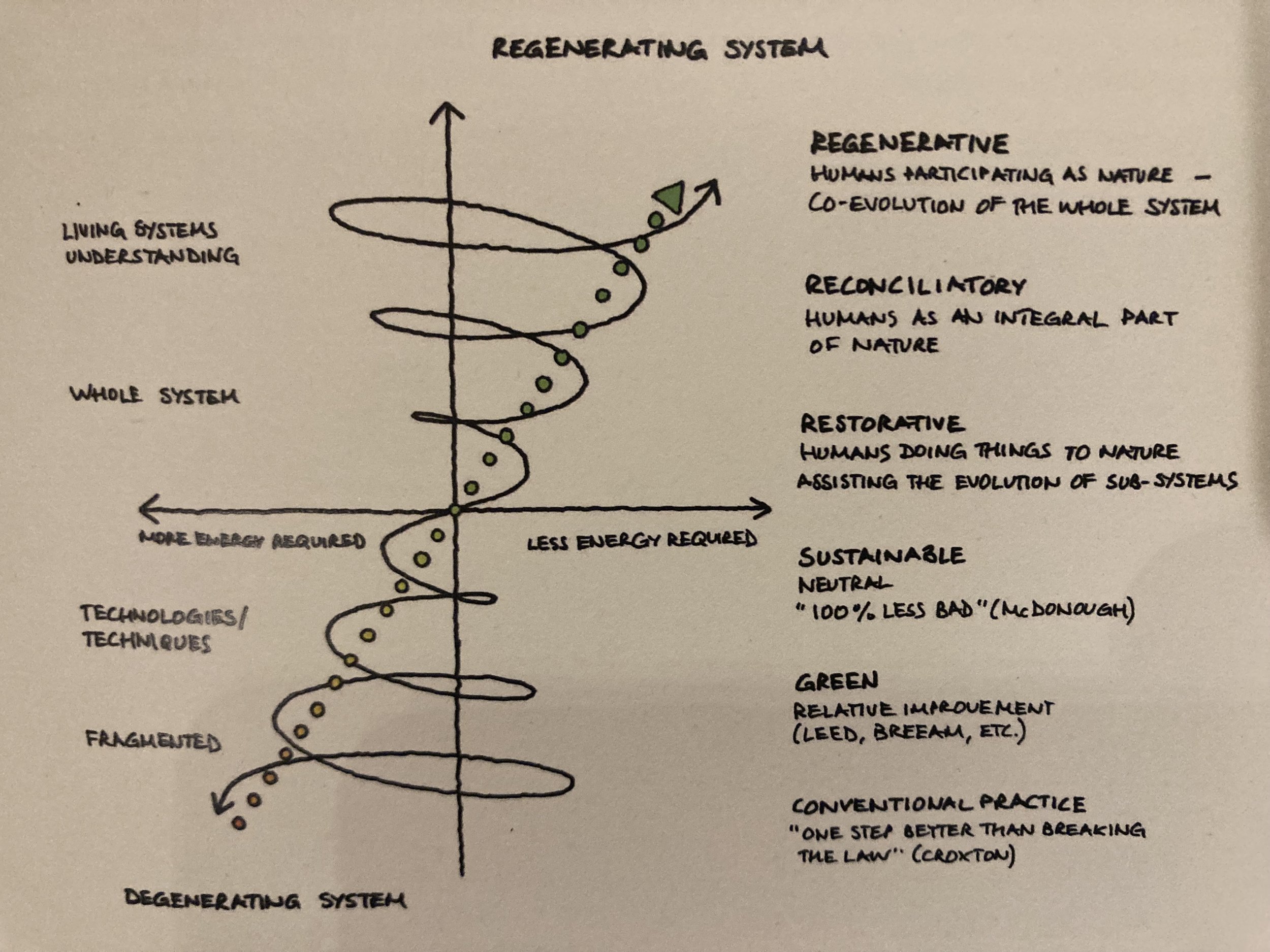
p9 Flourish by Sarah Ichioka and Michael Pawlyn
Flourish is a call to action that cites Donella Meadows assertion that the best leverage’ points to create positive change is when acting beyond old and creating new paradigms in order to move from Degenerative to Regenerative Systems.
In a presentation from November 2025 to the Biomimicry Institute, drawing on philosopher Freya Mathews, Pawlyn shifted the window of discourse further beyond Cradle to Cradle for the first time by asking ”not what nature wants from our by products, but what does nature want in the first place?” [9]
This notable development in thinking situates progressive Western design thinking firmly in territory occupied until now by philosophers, poets and activists and to some extent, the modern of the Chinese communist party who appear to be making headway in their pursuit of an ‘Ecological Civilisation’.
According to Pawlyn, humanity could be crossing beyond the “sustainable / neutral” into an era characterised by ‘restoration, reconciliation and regeneration’ (see image).
Palwyns most recent assertions from November 2025 identify a shift from the human ‘Post-Modern’ to the ‘Metamodern’ era characterised by Regenerative development, with the planet as the systemic unit and with long term thinking at its core. “want to get to a point where Human Beings are participating as nature and co-evolving as part of that whole system”. [10]
Participating as nature is an evocative notion and one which draws heavy parallels with the poetics of place. Beyond a delightful vision of a ‘planetary, possibilist first metamodernism’, Pawlyn does not provide a roadmap and given the scale and urgency of the climate crisis rather more detail is desirable.
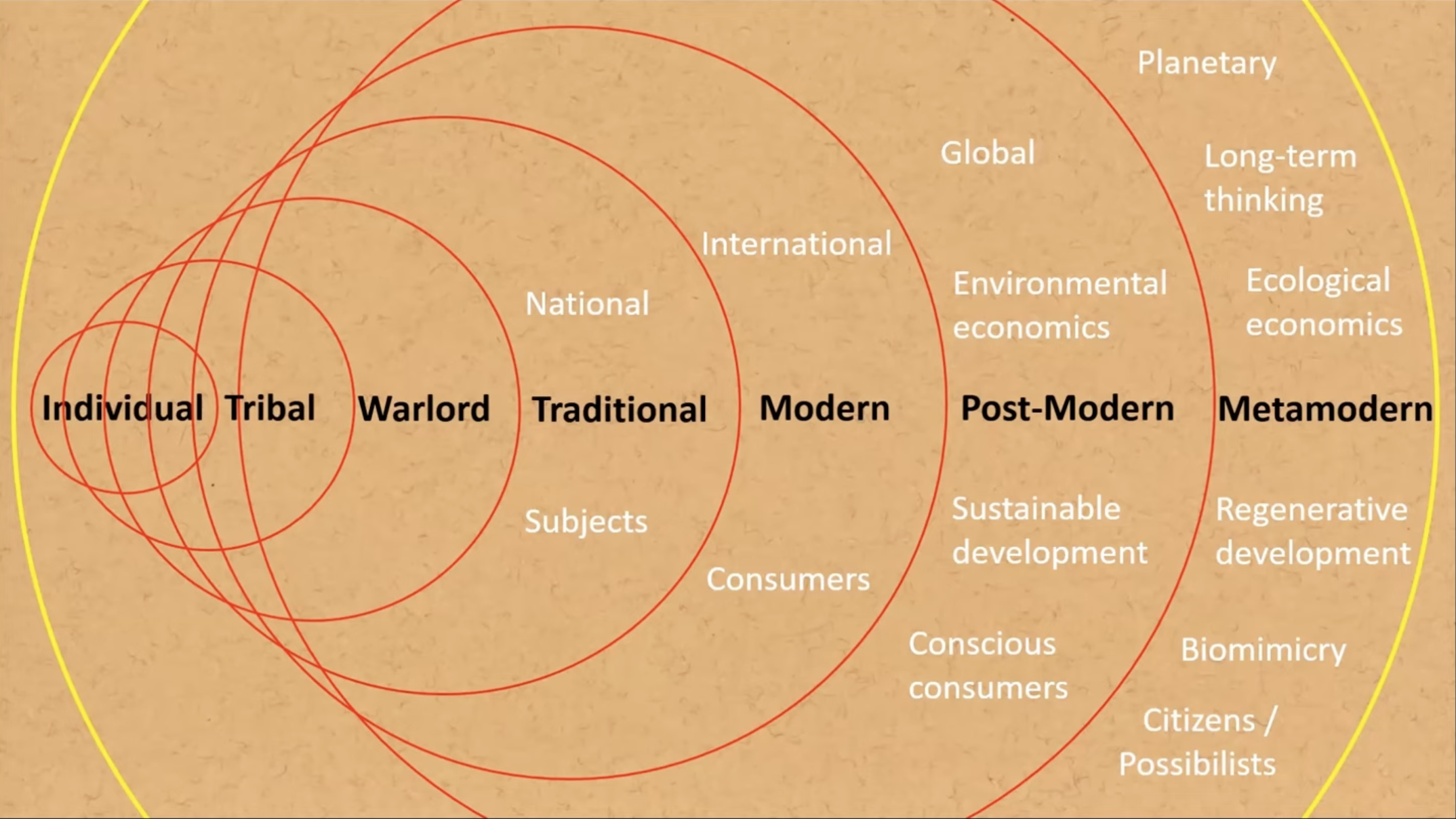
“”It is within the realm of possibility that we could develop a regenerative culture that touches every aspect of human life” ”
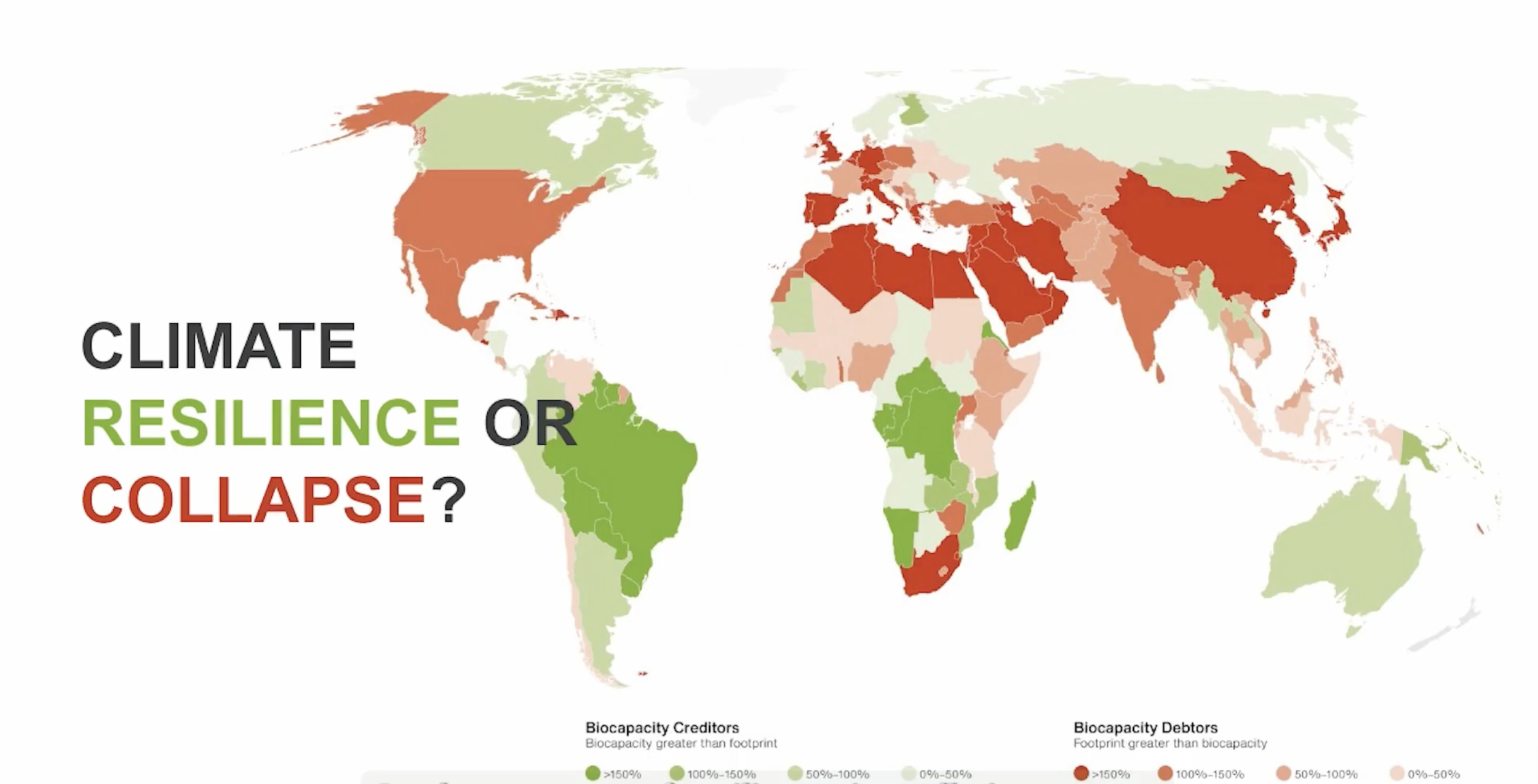
Participating as nature overlaps with a recent published concept of Biourbanism by Adrian McGregor of McGregor-Coxhall. Biourbanism is hard to ignore as it purports to be ”committed to assisting cities and citizens achieve resilient prosperity” in the face of 3 to 4 degrees of Climate change.
Set against the prospect of global population growing by another 3 billion people, McGregor proposes that cities, which are responsible for 75% of carbon output “must also be the solution” and measures national resilience against biological capacity to supply clean water, food and materials to sustain a population. By his metrics (supplied by global footprint network) the UK has greater than 150% biocapacity debt evidenced by recent grain shocks and food price inflation in the global supply chain.
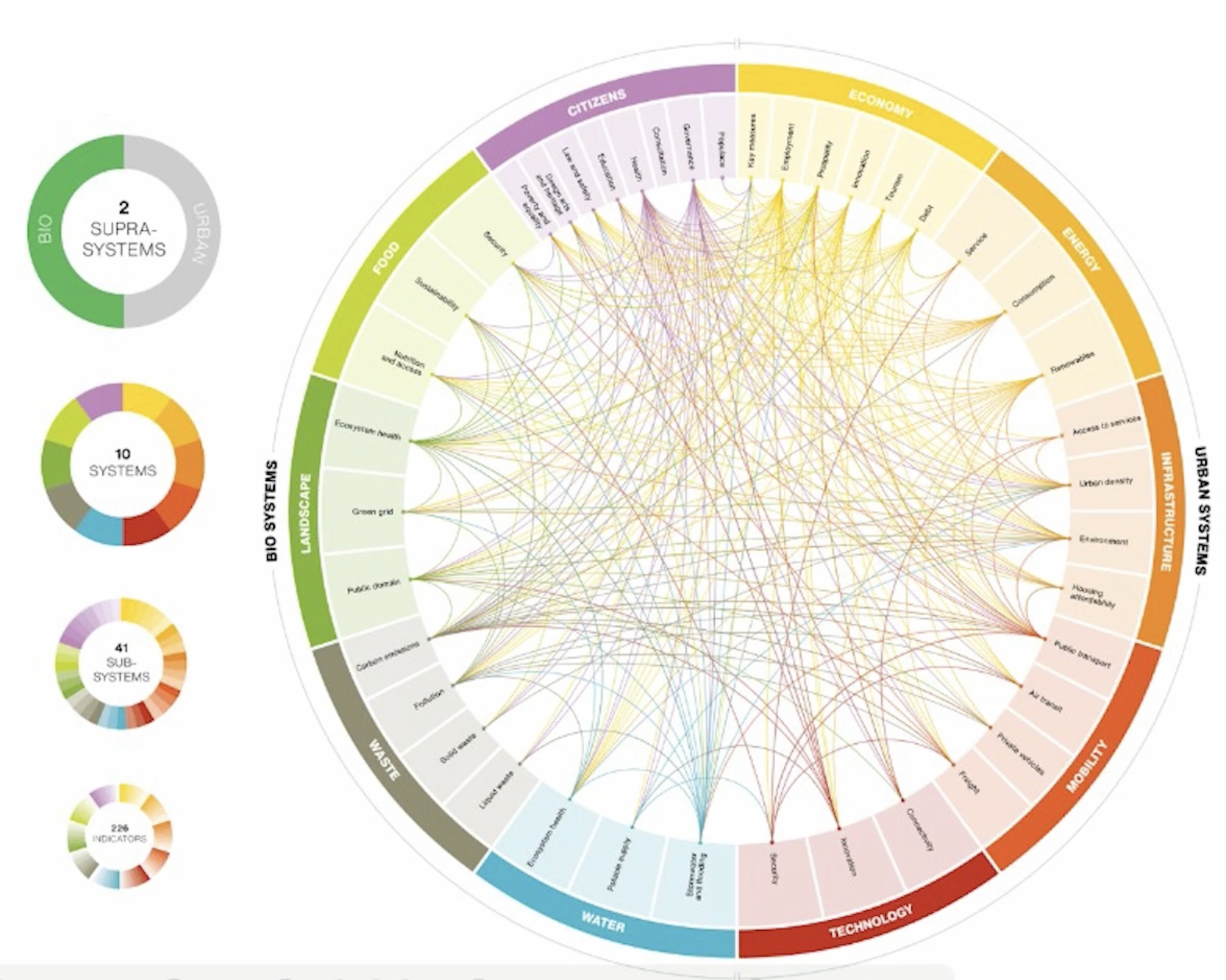
Biourbanism views humanity as part of a system of systems and ‘cities as anthromes’ or (anthropegenic biomes) categorised by the climate in which they exist. Cities are as ‘human modified nature’ that must be conceived and managed accordingly. Like Cradle to Cradles Biological and Technical nutrition, MacGregor splits out Biological & Urban Systems of cities as a lens through which cities resilience can be assessed.

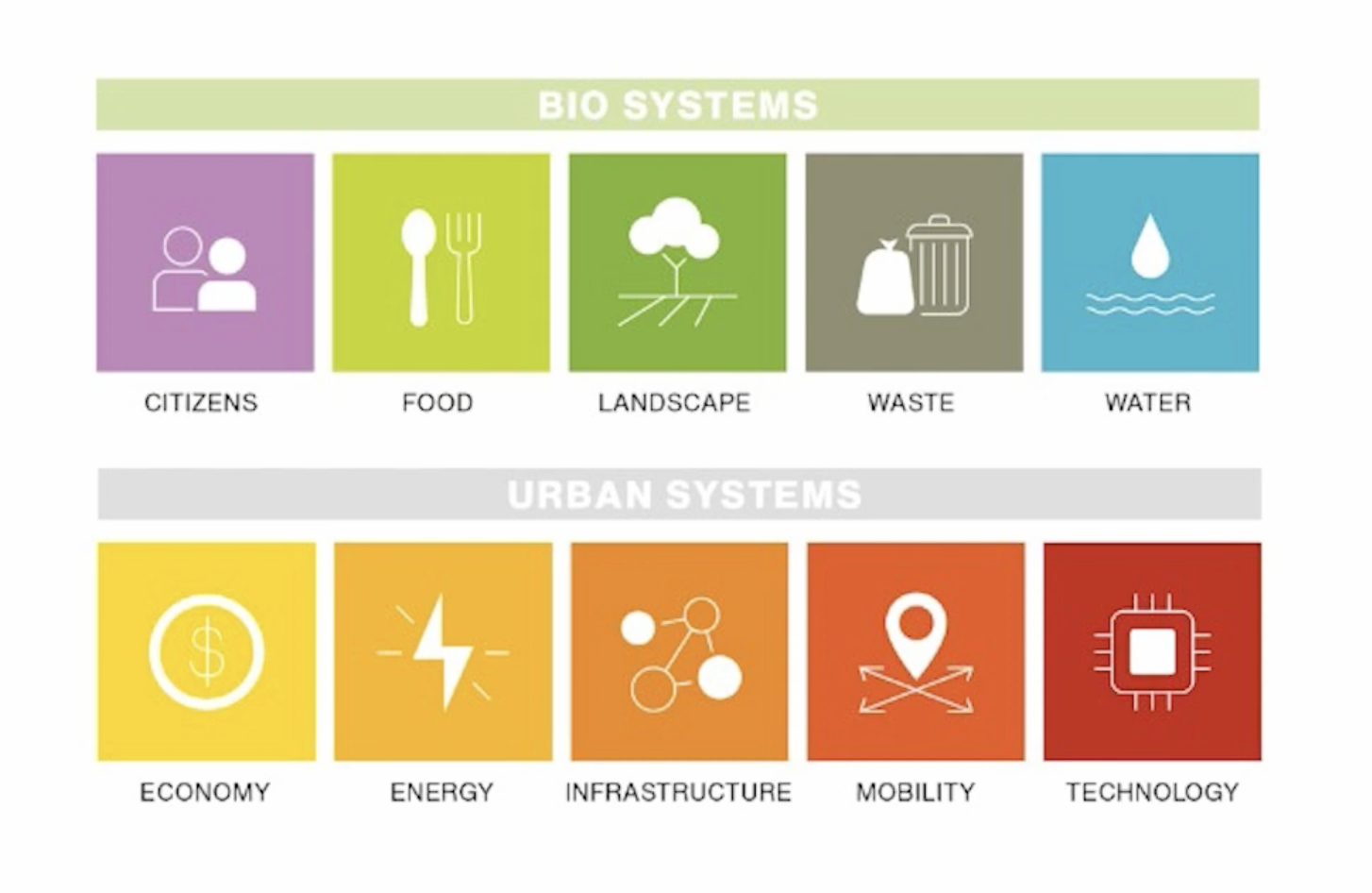
MacGregor recognises that deepening Circular Economy is the path to the greatest gains towards resilience but argues that changes in cities must be understood in terms of their ‘commensurate impacts’ for example “if you make a decision in infrastructure, it has a commensurate impact in water and waste”. Decisions must not be silo’d and must be considered in terms of the overall resilience of a place.
[1] Meadows, D.H., Meadows D.L., Randers, J. & Behrens W.W. III The Limits to growth: A Report for the Club of Rome’s Project on the Predicament of Mankind. New York: Universe Books. (1972)
[2] Adam Curtis, All Watched Over By Machines of Loving Grace, 2011
[3] William Mcdonough and Michael Braungart. Cradle to Cradle: Remaking the Way We Make Things. New York: North Point Press, 2002.
[4] William Mcdonough. The Upcycle: Beyond Sustainability—Designing for Abundance. New York: North Point Press, 2013.
[5] https://www.nike.com/my/sustainability
[6] Ellen MacArthur Foundation. 2016. Intelligent Assets: Unlocking the Circular Economy Potential. Cowes, Isle of Wight: Ellen MacArthur Foundation.
[7] Janine M Beynus. Biomimicry: Innovation Inspired by Nature. New York: Harper Perennial, 2002.
[8] Michael Pawlyn & Sarah Ichioka. Flourish: Design Paradigms for Our Planetary Emergency. Axminster, UK: Triarchy Press, 2021.
[9] Michael Pawlyn interview https://www.youtube.com/watch?v=HQR7XZaG2UU
[10] Macgregor Coxhall Presentation https://www.youtube.com/watch?v=Q4iDdp00TlA&t=519s