Place, Participation & Belonging
KEY INGREDIENTS TO ACHIEVE EVERYDAY MAGIC
“If you don’t know where you are, you don’t know who you are”
— Wendell Berry (as quoted in Real England by Paul Kingsnorth) [1]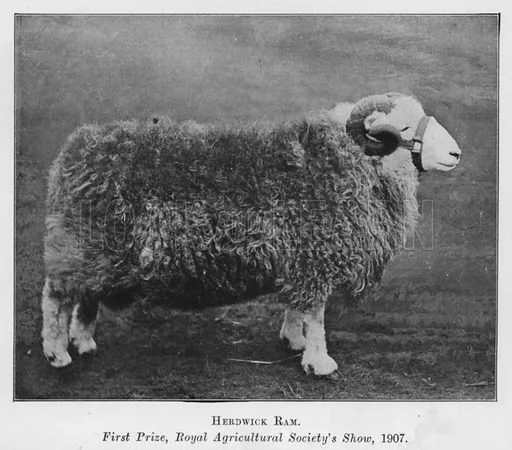
Sentiments surrounding the loss of identity of British places where raised in speech by Charles, then Prince of Wales, to the Civic Trust in 2004 where he addressed the importance of local architectural identity in relation to a sense of place. For context here, the speech “Local Identity in a Fast Track Age” was made 3 years before the first iphone launched.
By 2005, the New Economics Foundation was reporting widely on ‘Clone Towns Britain’ where global brands were swamping the individuality of the high streets. Andrew Simms, the foundation's policy director, said:
"Clone stores have a triple whammy on communities. They bleed the local economy of money, destroy the social glue provided by real local shops and steal the identity of our towns”. Then we are left with soulless clone towns "The argument that big retail is good because it provides consumers with choice is ironic, because in the end it leaves us with no choice at all.” [3]
"We’ve seen the 'Bluewatering' of our country, where one town looks exactly like the next”
Prince of Wales, "Local Identity in a Fast-Track Age" (speech, Shoreditch, London, November 17, 2004) [2]In his 2008 book Real England, writer and activist Paul Kingsnorth railed against the surging ubiquity “homogenising forces of global capitalism undermine the sense of place in England” and how the wave of ‘Tesco-isation and shopping malls’ extinguish “the little bits of organically grown culture that make England in any way distinctive”. [1]
Kingnorths grandparents ran an old-fashioned English sweetshop that sold sherbet lemons & barley twists from jars behind the counter, he is steeped in traditional Englishness and wrote passionately about the loss of Englands historical identity and its impact. “It is a sense of place that binds communities together, and distinguishes living culture from dead ones.”
Kingsnorth also reflected on the promise vs the reality of globalisation and its impact.
“rootless we gain freedom, placeless we belong everywhere. Placeless and Rootlessness do not cause contentment, but despair. ”
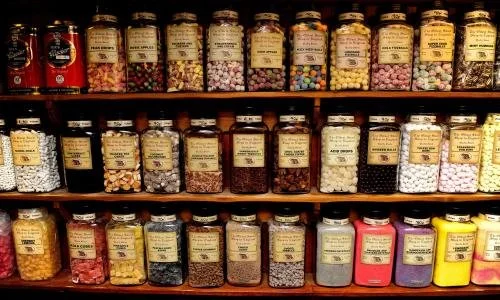
...the nice old lady that owned the sweetshop constantly forgot her glasses
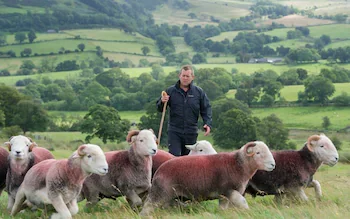
Man, beast and landscape as one.
Concerned with the themes raised by Kingsnorth, in his 2015 book The Shepherd’s Life [4]: A Tale of Northern Englands Lake District, James Rebanks wrote movingly of the process of “Hefting” as the gradual habituation of generations of hardy livestock breeds to uplands pastures and landscapes of the Lakes.
The book speaks of the toughness of herdwick sheep breeds and includes vivid descriptions of the demanding physical and emotional lives of shepherds in the Lakes. The Shepherds Life asks whether, like the livestock, the author and his family who farmed the same valleys and hills for generations are also hefted to the land and the place.
The book was a bestseller that stirred a debate about community, identity and a way of life under severe economic pressure which may be lost as a result of unadulterated neo-liberalism and globalisation, the same forces that are shaping our high streets.
Both Kingsnorth and Rebanks’ grappling with the romantic and existential questions of communities illuminates the work of Norwegian Architect and phenomenologist Christian Norberg Schulz.
In the life situations of the farming communities of The Shepherds Life, ‘place’ is as much a participant in their lives as they are part of its; the landscape is a store of memory and experience for the farmers that continually transmits meaning back to them.
In his text Genius Loci: Towards a Phenomenology of Architecture [5], Christian Norberg Schulzs develops Heideggers concept of ‘dwelling’. Dwelling is highly ccurate in this context where Rebanks and his community have a clear and solid ‘existential foothold’ and his community “dwell” in the fullest Heideggerian sense.
Schulz also introduces the idea of man becoming ‘friends’ with an environment that deepens his bond to a place;
“Nordic man has to be friends with fog, ice and cold winds:, he has to enjoy the creaking sound snow under the feet when he walks around, he has to to experience the poetical value of being immersed in fog:” Norberg-Schulz, 1980. [5]
As a multigenerational farmer and a talented writer, Rebank's work has catalysed awareness and participation between his community and the place, deepening the emotional bond of the community and drawing through poetics and manifesting in politics.
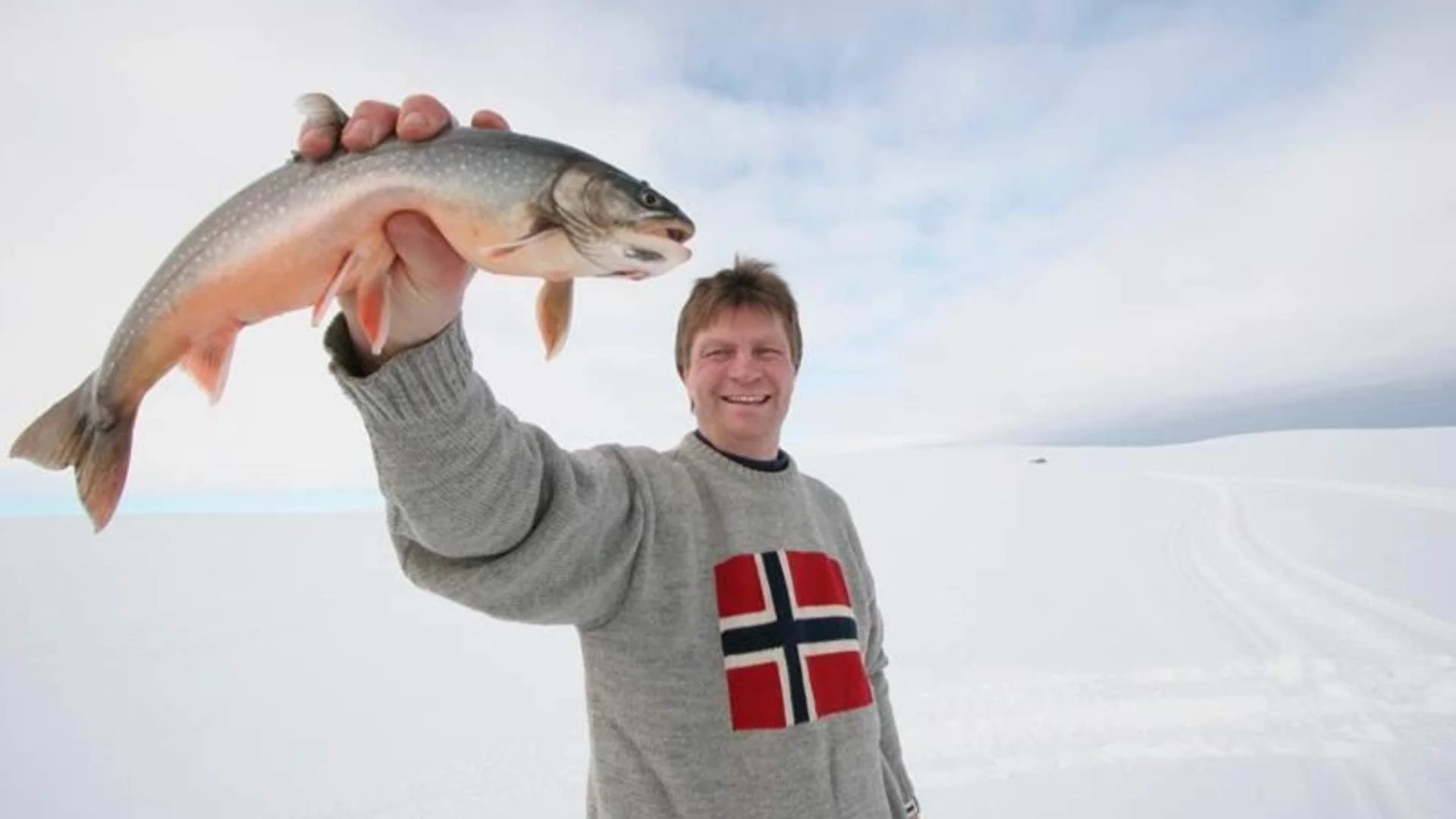
Max Dwelling (not his real name), just a Nordic man visibly experiencing environment as meaning.
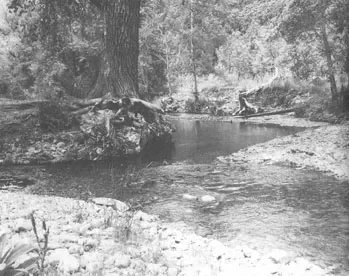
this place is “Water Flows Inward Under a Cottonwood Tree” other examples from Basso’s book include; Goes Down Between Two Hills, Slender Red Rock Ridge, Eagle Hurtles Down, Whiteness Spreads out Descending to Water, Juniper Tree Stands Alone, Line of Blue Below Rocks, Big Cottonwood Trees Stand Here and There, Flakes of Mica Float Out.
*I interpret this as a type of wise cockney rhyming slang; he did an ‘Eagle Hurtles Down’ and almost ended up ‘Flakes of Mica Float Out’)
Source: https://landlibrary.wordpress.com/2010/01/10/wisdom-sits-in-places/
In the book ‘Towards Re-enchantment: Place & Meaning’ [6] a collection of poets reflect on how “alienations of modern society threaten our sense of belonging and the importance of place to creative possibility in life and art cannot be underestimated”.
Contributer Robert Macfarlane describes Keith Basso’s ‘Wisdom sits in places’ (1996) [7] written about the radical situatedness Apache people of Western Arizona.
”In the Apache imagination, geography and history are consubstantial. Placeless events are inconceivable, in that everything that happens must happen somewhere and so history issues from geography in the same way that water issues from a spring: unpredictably but site specifically”.
’Speaking with names’ (Basso’s first book) uncovered how place names were used in conversations as analogies to the wisdom gained in those places*.
Macfarlane also describes the work of anthropologist Lucien Levy Bruhl for whom ‘participation’ was ‘talking to the land’ and describing how relationship with landscape develops through “animistic logic of people for whom inert objects like stones or mountains are thought to be alive”
“Man dwells when he can orientate himself within and identify himself within an environment, or, in short, when he experiences the environment as meaningful. Dwelling therefore implies something more than “shelter”. It implies that the spaces where life occurs are places, in the true sense of the word.”
Landscape, climate, language, poetry + literature, food, animals, community, shelter, family and history enable humans to participate in, and deepens bonds with ‘place’. Though the nature of the spiritual or experiential relationship between place and participation is most accessible through language and clearest in circumstances where to quote Schulz, people “dwell meaningfully”.
Through their various writings, Kingsnorth, Rebanks, Abrams & Macfarlane all address a spirit of place and meaning but this is not a new idea; Roman philosophers valorised places by projecting Genius Loci, believing that every place, building or landscape was protected by a spiritual guardian (or local genius) that embodied the essence and identity of that location.
The term ‘Genius Loci’ was revived in architectural and urban theory in the 1980s by Schulz who reinterpreted the idea through phenomenology and drawing on Heidegger. Schulz proposed that architecture should reinforce the importance of place rather than erasing it.
“A place is a space which has a distinct character. Since ancient times the genius loci or “spirit of place”, has been recognised as the concrete reality man has to face and come to terms with in his daily life. Architecture means to visualise the genius loci and the task of the architect is to create meaningful places, whereby he helps man to dwell.“
Norberg-Schulz’s work is rich with insights about place and architecture. “the existential purpose of building (architecture) is there to make a site become a place, that is to uncover the meanings potentially present in the given environment” [5] P18
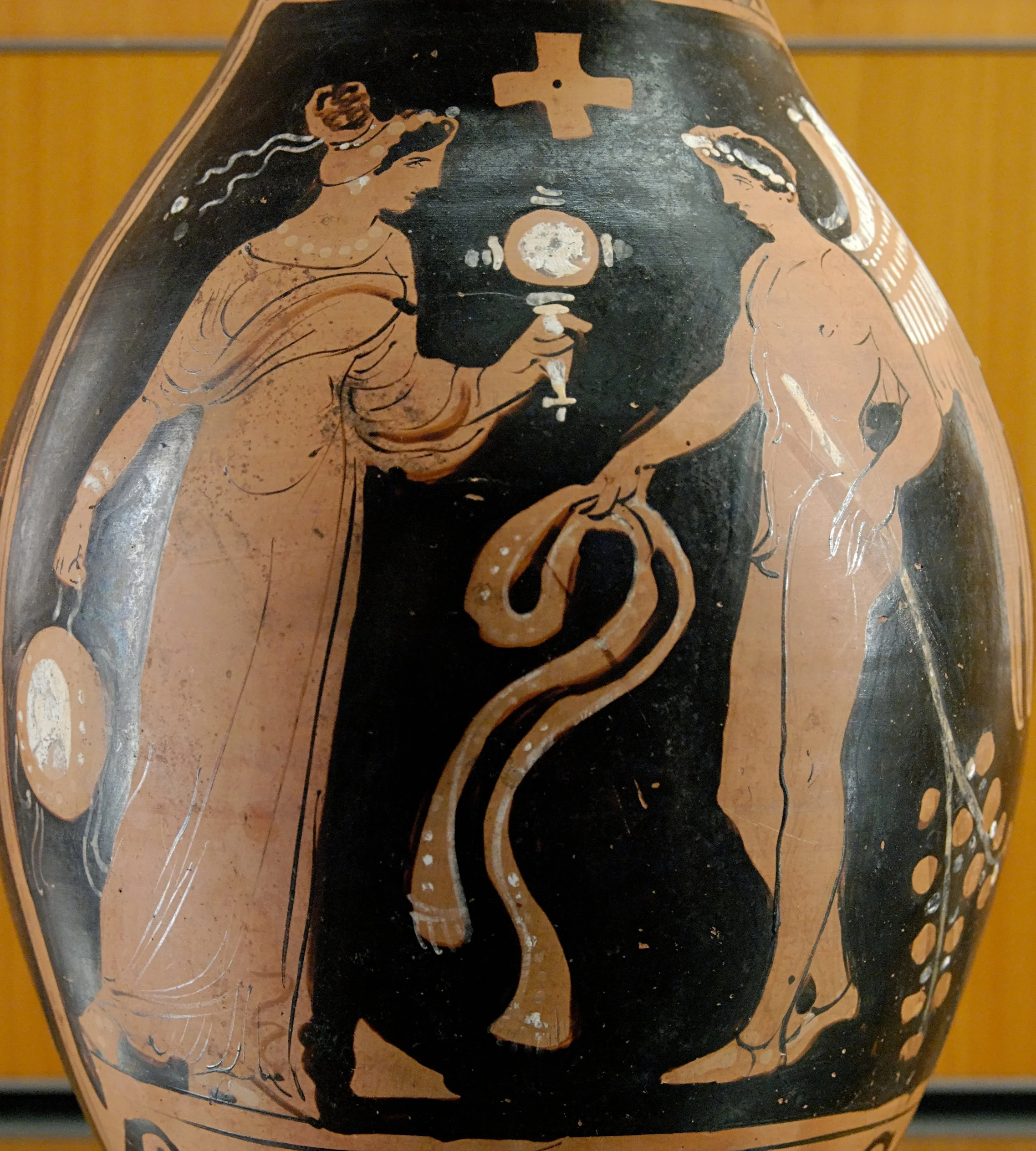
the local genius is the naked one on the right with wings
https://commons.wikimedia.org/w/index.php?curid=5648794
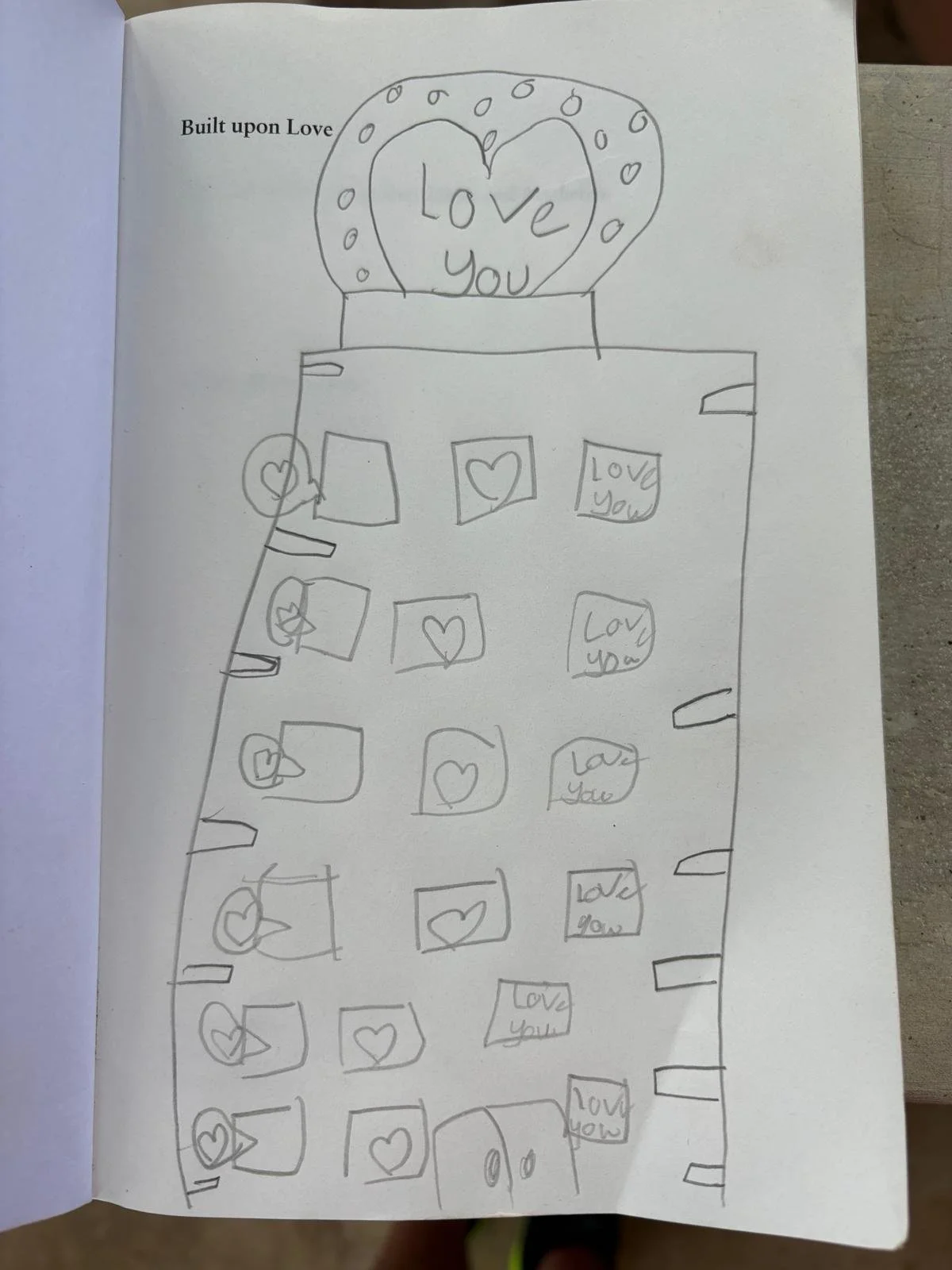
the client was reluctant but the designers insisted on the roof mounted snow globe; an interpretation of ‘Built upon Love’ by my 7 year old daughter.
Allied to the work of Schulz, Architectural Philosopher Alberto Perez-Gomez has built a corpus which puts the onus onto architects through Ontological Design; “the possibility of enabling places that complete us and let us dwell poetically and purposefully on earth” [8]
In a Keynote presentation at Eric Parry Architects [9] Perez-Gomez proposed that architects and architecture are responsible for creating “rituals that answer fundamental human questions and serve aswell as authentic public spaces”.
Gomez puts erotic love (in the greek sense) at the heart of design and seeks to demonstrate that his approach is rational versus “premises drawn from normative disciplines or abstract logical systems” which, in absence of other choices available globally, I understand is neo-liberal capitalism. In doing so he addresses the politics surrounding architecture and urban design. “The role of the architect is first political…. of opening up a space of order for society, before building actually”
Throughout he maintains his pre-occupation: LOVE. “Built upon love, architecture engages the inhabitant as the true participant” [8]
Given a personal predisposal to activism and the urgency of change, there is a risk of overquoting the work of Lefebvre though I would be remiss to overlook such a meaningful contribution to phenomenological discourse in Urban Design. Lefebvres commentary is broadly consistent with the view of Kingsnorth (a self confessed Marxist), Harrington and Perez-Gomez in that “substantive social reform necessarily requires correlate spatial reform” and on the issue of neoliberalism.
“Ultimately, the sway of neoliberalism on social life and the built environment far outstrips the influence any putatively autonomous architect or urban designer could ever have” [10]. As theorist-activist, Lefebvres work appears to go further than most theorists in that he gently advocates for actual change through a kind of system level Marxism-lite revolution. In doing so he chides his fellow theorists for a lack of imagination in the ways to create change. “he doesn’t go too far - he keeps his eyes fixed on so called reality: he is a realist … but he doesn’t think!” from this position Lefebvre creates the possible impossible which is not identical but was a key reference point in arriving at an idea of Everyday Magic. “The possible impossible (utopia) arises and shows itself in the heart of the possible (the everyday)” [10]
One Urban design theorist who cannot be accused of a lack of imagination is Nigel Thrift. In order to create a scaffold on which to relate an understanding of Non Representational Theory (NRT), I have conflated Lefebvres possible impossible with Donald Rumsfelds famous ‘Known knowns’ speech making the Possible Possible, the Possible Impossible (Everyday Magic) Impossible Possible (Non-representational theory) and the Impossible Impossible.

Former US Secretary of state Donald Rumsfeld: Hawkish, controversial, arrogant. I’d have him back in heartbeat.
EXPERIMENT: in order to test my theory of the nature of the relationship between Lefebvre & Nigel Thrifts theories, I input the full length “Known Unknowns” speech by Donald Rumsfeld and added the [possible possible, possible impossibles (as Everyday Magic), impossible possibles (as non representational theory) & impossible impossible] structure into Google Gemini and asked it to conflate the two; the result is below:
“Reports that say a social transformation hasn't happened are always interesting to me, because as we know, there are possible possibles; there are things we know can happen, and they do.
We also know there are possible impossibles; that is to say we know there are things we can imagine as a 'concrete utopia'—like a city for people instead of profit—but which the current system makes impossible to achieve.
But there are also impossible possibles—the ones we can't represent, the ones we can't name or predict, but which are already happening in the affects and rhythms of the street, making the world possible every single second.”
Source; Lefebvre X Thrift X Donald Rumsfeld via Google Gemini
In seeking to understand the intersection between the poetry of place, participation, belonging, love, the possible impossible and NRT, I also turn back to Perez-Gomez’s work and his discussion of architectures significance.
“Participation in a poetic moment is transformative…. In poetic works, regardless of their specfic medium, the primary orality and embodiment of our preflective engagement with the world are made evident; our full consciousness is addressed… We meet the work halfway and we “know” with that organ we cannot name, between the heart and stomach. Truth appears as a spark, an ephemeral sound, a silence, never permanent, always an evanescent encounter”. [8] p190
Similar to Gomez’ description of ‘prereflective engagement’, NRT intends to investigate a moment that takes place before cognition. Before language, gathering, orientation and identification. From my reading, I believe this is chosen because it is both uncorruptable and un-liquifiable.
In spatial terms, NRT is concerned with the role of space as a vessel for actions that take place, though its primary relevance to urban design appears to be its ‘experiential’ focus.
NRT appears to valorise neurologically significant moments before language and even before emotion, it refers to temporal but fleeting events when we are ‘struck’ or perhaps experience wonder or awe which might be described as ‘spiritual’ though its study is not of a god. According to Nigel Thrift NRT is;
“intended as the beginning of an outline of the art of producing a permanent supplement to the ordinary, a sacrament for the everyday, a hymn to the superfluous….“It is portentous because it involves taking some of the small signs of everyday life for wonders and this involves all manner of risks and not least pretentiousness” [11]
Reviewing the methodology of studying NRT provides further some insight. Vannini proposes that “Non-Representational Theory seeks novelty and experimental originality. It wants us to feel something powerful, to give us the sense of the ephemeral, the fleeting and the not-quite-graspable.” [12]. NRT appears to value the conditions which might create glimpses of ‘alternative futures’ or in other words as a theory that seeks to access to Everyday Magic.
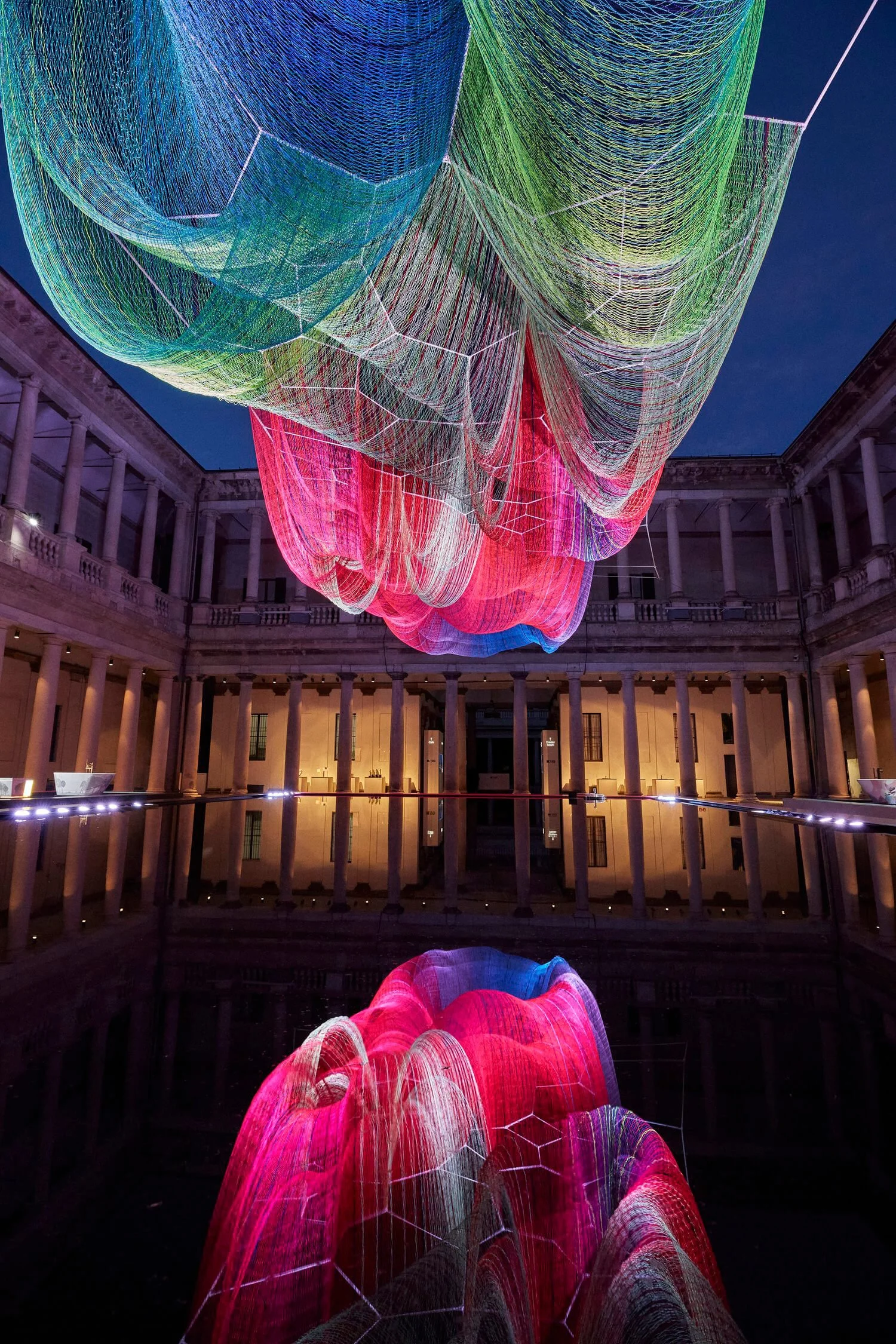
Janet Echelman’s Making Waves; definitely not for grasping
“The effervescence with which things actually take place”
[1] Paul Kingsnorth. Real England: The Battle against the Bland. London: Portobello Books, 2008.
[2] Prince of Wales, "Local Identity in a Fast-Track Age" (speech, Shoreditch, London, November 17, 2004)
[3] Clone Towns Britain Report: https://new-economicsf.files.svdcdn.com/production/files/1733ceec8041a9de5e_ubm6b6t6i.pdf
[4] James Rebanks. The Shepherd's Life: A Tale of the Lake District. London: Allen Lane, 2015.
[5] Christian Norberg-Schulz. Genius Loci: Towards a Phenomenology of Architecture. New York: Rizzoli, 1980
[6] Evans, Gareth, and Di Robson, eds. Towards Re-Enchantment: Place and Its Meanings. London: Artevents, 2010
[7] Keith Basso, Wisdom sits in places via https://landlibrary.wordpress.com/2010/01/10/wisdom-sits-in-places/
[8] Alberto Pérez-Gómez, Built upon Love: Architectural Longing after Ethics and Aesthetics (Cambridge, MA: MIT Press, 2006).
[9] Alberto Pérez-Gómez at Eric Parry Architects, March 2016, https://www.youtube.com/watch?v=O6be8IRyL8E
[10] Nathaniel Coleman, Lefebvre for Architects, Thinkers for Architects, London: Routledge, 2015,
[11] Nigel Thrift, Non-Representational Theory: Space, Politics, Affect (London: Routledge, 2008).
[12] Phillip Vannini, ed., Non-Representational Methodologies: Re-Envisioning Research, Routledge Advances in Sociology (New York: Routledge, 2015)
[13] Nigel Thrift, "The material politics of place and time," in Material Geographies: A World in Motion, ed. Ben Anderson and Paul Harrison (Los Angeles: Sage Publications, 2007), 29.